Raw, Selvedge and Stretch Denim: What the Difference Does to a Tall Fit
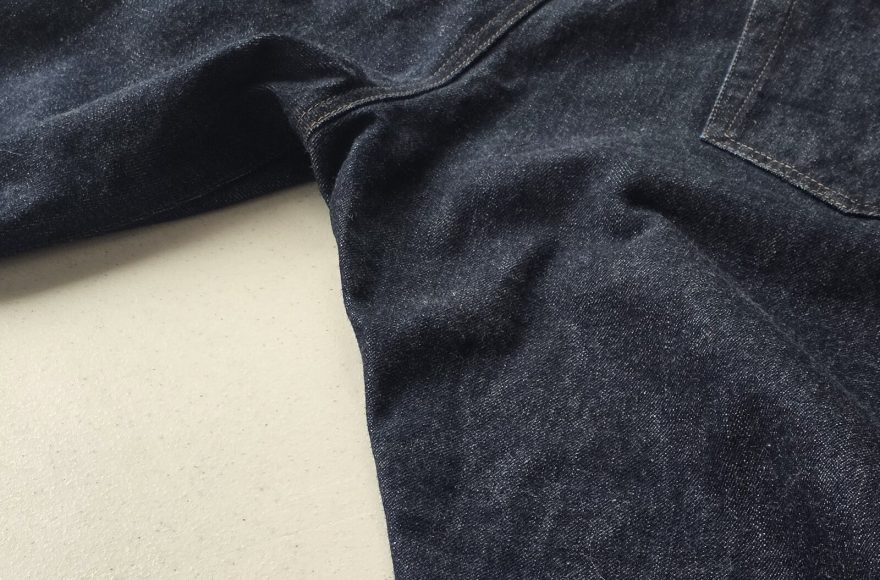
Denim gets sold with four words that are used almost interchangeably and mean completely different things: raw, selvedge, rigid and stretch. On a short leg the difference is mostly aesthetic. On a 36 inch inseam it decides whether the jean fits.
Here is what each one actually means, and then the measured case from two pairs I own that sit a quarter of an ounce apart in weight and went opposite ways.
The four words
| Term | What it actually describes | Why a tall man should care |
|---|---|---|
| Raw (or dry) | Denim that has never been washed after dyeing. It is stiff, dark and uniform when new. | It shrinks on the first wash. Buy a raw jean at your exact inseam and you may lose the length you bought it for. |
| Washed | Denim washed at the factory, so the shrinking and some of the fading has already happened. | What you measure is roughly what you keep. Safer if the length is the thing you cannot compromise on. |
| Selvedge | A weaving method, not a fabric. Narrow shuttle looms produce a finished, self-bound edge down the outseam. | It says nothing about fit on its own. It usually travels with heavier, rigid, all-cotton denim, and that does affect fit. |
| Rigid vs stretch | Whether there is elastane in the yarn. Rigid is 100% cotton. Stretch is typically 98–99% cotton with 1–2% elastane. | This is the one that matters most, and the one almost nobody weighs up before ordering. |
The common mistake is treating selvedge as a quality grade. It is a construction method. A selvedge jean is often very well made, but the edge of the fabric is not what you feel when you sit down — the cotton content is.
One percent elastane, two opposite verdicts
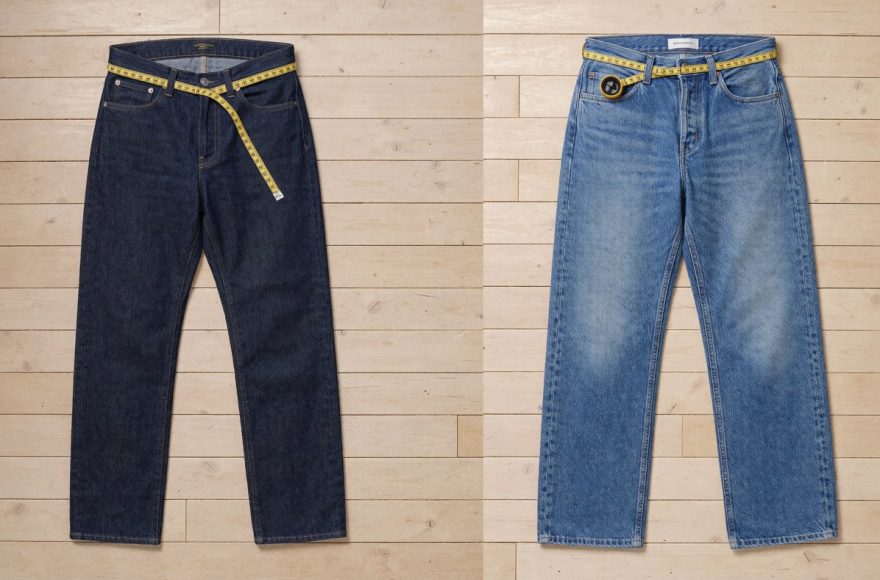
I own two pairs that make the point better than any explanation. Both taped flat by me, both worn by the same person at 6 foot 8 and 285 pounds, and they are within a quarter of an ounce of each other in fabric weight.
| Todd Shelton Original 13 | Ariat M4 Low Rise Legacy | |
|---|---|---|
| Fabric | 13 oz selvedge, 100% cotton, no stretch | 12.75 oz ring-spun, 99% cotton / 1% elastane |
| Label size | 39×36 | 40×36 |
| Front rise | 11.5″ | 12.25″ |
| Back rise | 16.0″ | 17.25″ |
| Thigh, flat | 12.5″ | 13.0″ |
| Leg opening | 8.0″ | 9.75″ |
| Verdict | Returned on fit — tight through the thigh and seat | Kept. “Very nice, and fit great.” |
Half an inch of thigh and an inch and a quarter of back rise separate them on paper. That sounds like a rounding error. It is not, because of the fourth column in the table above.
Stretch denim borrows. Rigid denim borrows nothing.
When a stretch jean runs slightly short in the rise, the fabric gives a quarter inch at the seat as you sit and you never notice it happened. One percent elastane is enough to do that. Rigid denim cannot. A short rise in 100% cotton pulls immediately and there is nowhere for the tension to go, so the jean is dragged down off the waist every time you bend.
This is not a flaw in rigid denim. It is the whole point of it — it holds its shape, it fades where you actually crease it, and it lasts. It just means the measurements have to be right when you order, because the fabric will not quietly cover a mistake the way stretch does.
What the weight number means
Denim weight is given in ounces per square yard. Rough bands, and what each tends to mean on a long leg:
- Under 11 oz — light. Drapes, creases softly, wears out faster at the thigh. Usually has stretch in it.
- 11 to 13 oz — the standard range. Most jeans you own live here.
- 13 to 16 oz — heavy. Holds a shape, breaks hard over the shoe, takes weeks to soften.
- Above 16 oz — specialist. Stiff enough to stand up on its own when new.
Weight and stretch are independent, but they correlate in practice: heavier denim is usually rigid, lighter denim is usually not. If you are moving from a 12 oz stretch jean to a 14 oz raw one, you are changing two variables at once, and both of them work against a short rise.
If you are tall and buying raw or selvedge for the first time
- Do not order your usual measurements. Moving from stretch to rigid, you need more rise and more seat than the tape suggests, not the same.
- Check the back rise before anything else. It is the number that decides whether the jean stays where you put it, and very few brands publish it. Todd Shelton is a notable exception — their chart gives front rise, back rise, seat, thigh, knee and ankle for every size and every thigh fit.
- Account for shrink on raw denim. It shrinks noticeably on the first wash, and Todd Shelton’s own guidance notes that all-cotton denim is more stable afterwards than denim with synthetic stretch in it.
- If you cuff, buy longer. A single cuff eats about an inch of inseam, a double cuff two to three.
- Selvedge alone tells you nothing about fit. Ask what the cotton content is, not whether the outseam has a red line in it.
What to measure before you order
Lay a pair that already fits you flat and take four numbers: front rise from the top of the waistband to the crotch seam, back rise from the crotch seam up the center back, thigh across an inch below the crotch seam, and the leg opening across the hem. Note whether that pair has stretch in it, because it changes what those numbers are worth.
Then run them through the Fit Finder against the garments I have taped. The rise guide for tall men covers how the rise numbers work together, and everything measured is listed in the tall sizing database.
What I have not measured
Fabric content is recorded for two of the eleven jeans in my database so far — the two in the table above. I am filling the rest in as I re-check each pair, and I would rather say that than print a fiber breakdown I read off a product listing. Every measurement on this site is one I took with a tape; the fabric column is held to the same standard.



1 comment